
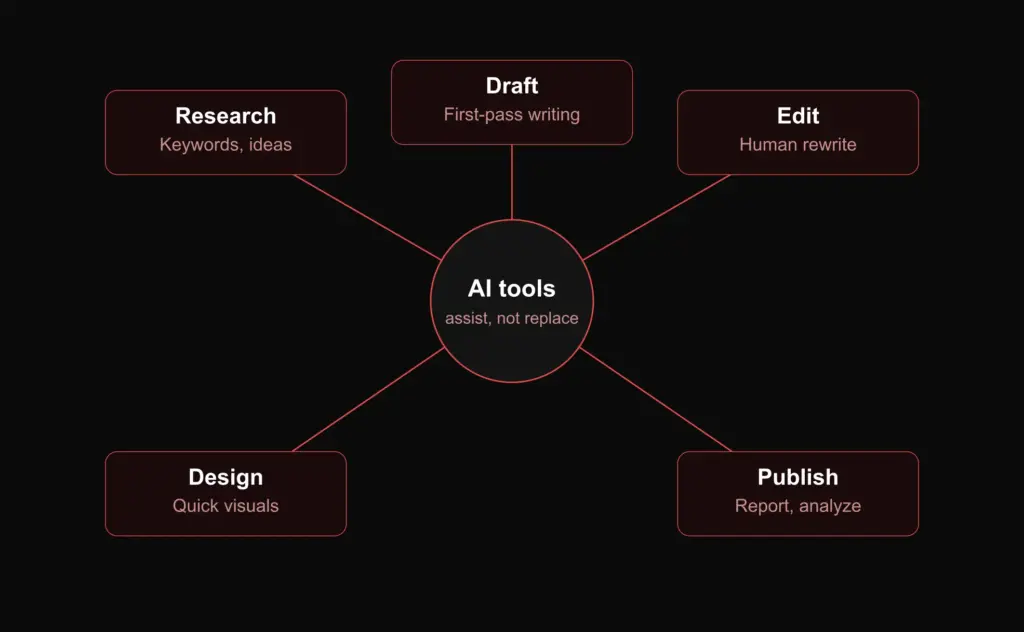
A few years ago, marketing meant spending hours writing posts, digging through spreadsheets, and guessing what people wanted to read. Today, AI tools have changed that completely for me. They don’t do my job for me — but they take care of the slow, repetitive parts so I can focus on the parts that actually need a human brain: strategy, creativity, and understanding people. Here’s a detailed, honest look at how AI fits into my day-to-day marketing work.
1. Writing Content Faster
Starting with a blank page used to be the hardest part of my job. I’d sit there for twenty minutes just trying to write the first sentence. Now, I let AI write a rough first draft — whether it’s a blog post, a social media caption, or an email to a client.
Here’s the important part: I never just copy and paste what AI gives me. AI-written content often sounds generic, a bit stiff, or “off” in tone. So I treat it like a first draft from a junior writer — I read through it, cut the parts that don’t sound like me, add my own examples and opinions, and rewrite the boring bits. This usually turns a task that took an hour into something that takes fifteen minutes.
2. Coming Up With Ideas
Some days, I open my content calendar and just stare at it, completely blank. No ideas, no inspiration. This is where AI has genuinely saved me. I ask it to give me a list of blog topics, ad headlines, or post ideas around a certain theme, and within seconds I have twenty options in front of me.
Most of the ideas aren’t perfect. But that’s fine — I don’t need AI to give me the final idea, I just need it to break the blank-page problem. Usually, one idea sparks a better idea in my own head, and that’s the one I actually use. It’s less like AI doing my thinking for me, and more like having a brainstorming partner who never runs out of energy.
3. Researching Keywords
If people can’t find your content, it doesn’t matter how good it is. That’s why keyword research matters so much in marketing — you need to know the exact words people type into Google when they’re looking for something.
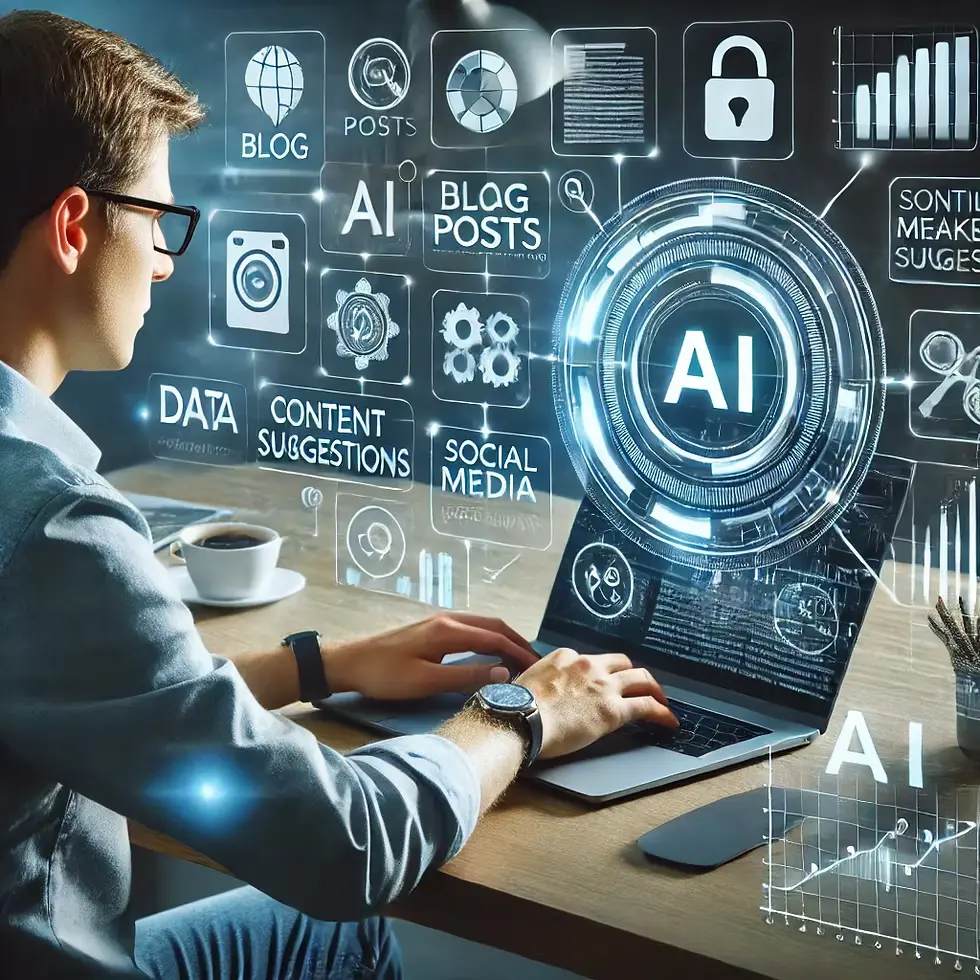
Doing this manually is slow. You have to guess words, check how many people search for them, and see how hard it is to rank for each one. AI tools speed this whole process up. I can describe my topic in plain language, and the tool suggests related keywords, questions people are asking, and search terms I wouldn’t have thought of myself. This alone probably saves me a few hours every week.
4. Making Simple Designs
I’m not a designer, and I don’t have time to learn complex design software. AI design tools let me type a short description and get a decent graphic back in minutes — good enough for everyday marketing needs, without waiting on a designer for small tasks.
AI design tools have changed that completely. Now I can type a short description of what I need a color scheme, a mood, a rough layout and get back something genuinely usable within minutes. It’s not going to replace a professional designer for big campaigns or brand work, and I don’t pretend it will. But for everyday marketing needs a quick Instagram graphic, a simple banner, a visual to test an idea before committing real design time to it, it’s more than good enough.
It’s given me a kind of independence I didn’t have before, where I’m not stuck waiting on someone else just to move a small task forward
5. Understanding My Numbers
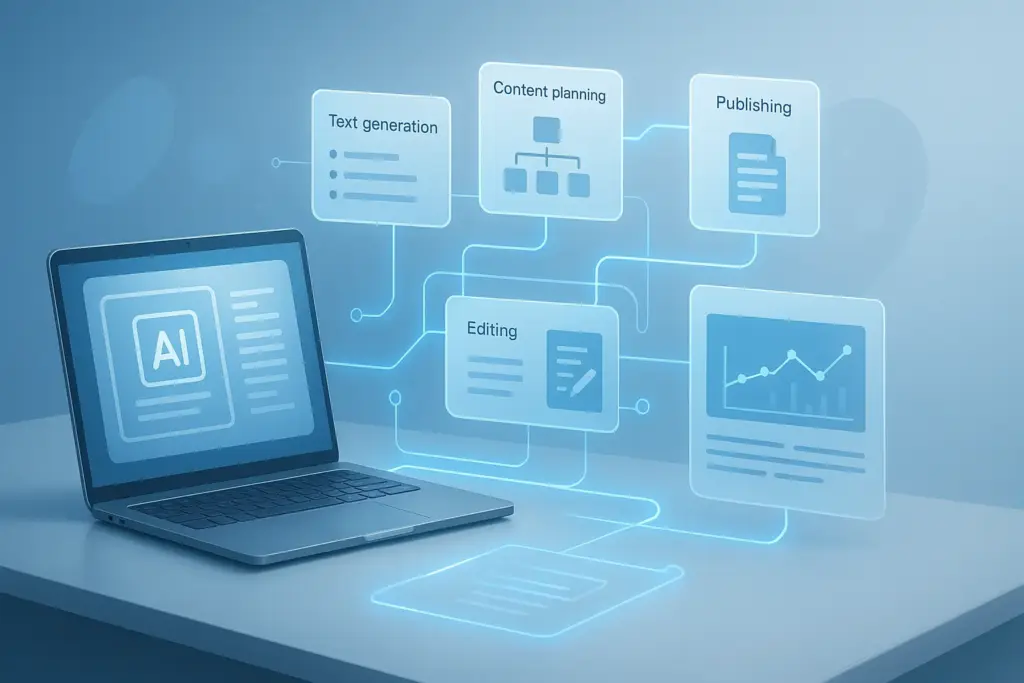
Marketing generates an overwhelming amount of data if you’re paying attention — traffic numbers, click-through rates, conversion percentages, bounce rates, engagement metrics. It’s easy to open an analytics dashboard, stare at a wall of numbers, and genuinely not know what you’re looking at, especially on a busy day when you don’t have time to dig deep.
This is where AI has quietly become one of my most-used tools. Instead of manually combing through spreadsheets trying to spot patterns, I can ask it to summarize what happened over a given period, flag anything that looks unusual, and explain why a certain trend might be happening — all in plain language, not technical jargon.
It doesn’t replace my own judgment; I still double-check anything before making a real decision based on it, especially when money or a client’s campaign is on the line. But it gets me from “here’s a pile of data” to “here’s what this actually means” far faster than doing it manually ever did.
6. Saving Time on Repetitive Tasks
Scheduling posts, writing quick replies, formatting reports — none of these are hard, but they add up. AI handles the small stuff, freeing up my time for bigger things like strategy and campaign planning.
AI handles a lot of this small, repetitive work now. It’s not glamorous, and it’s not the kind of thing I’d ever highlight in a case study — but it’s exactly the kind of quiet, background efficiency that adds up over a week. Every hour I save on formatting a report or drafting a routine reply is an hour I get back for actual strategy, actual campaign planning, actual thinking.
The Most Important Thing I’ve Learned
If there’s one thing I’ve taken away from using AI this much in my workflow, it’s this: AI doesn’t replace a marketer — it makes one faster, handling the repetitive, time-consuming work that drains energy without needing much real thought.
But it still needs a human steering it — someone to guide it, check its output critically, and add the personal touch, the brand voice, the real understanding of people that AI simply can’t fake.
Used right, it’s not a shortcut around good marketing — it’s what gives you the time to actually do good marketing.